
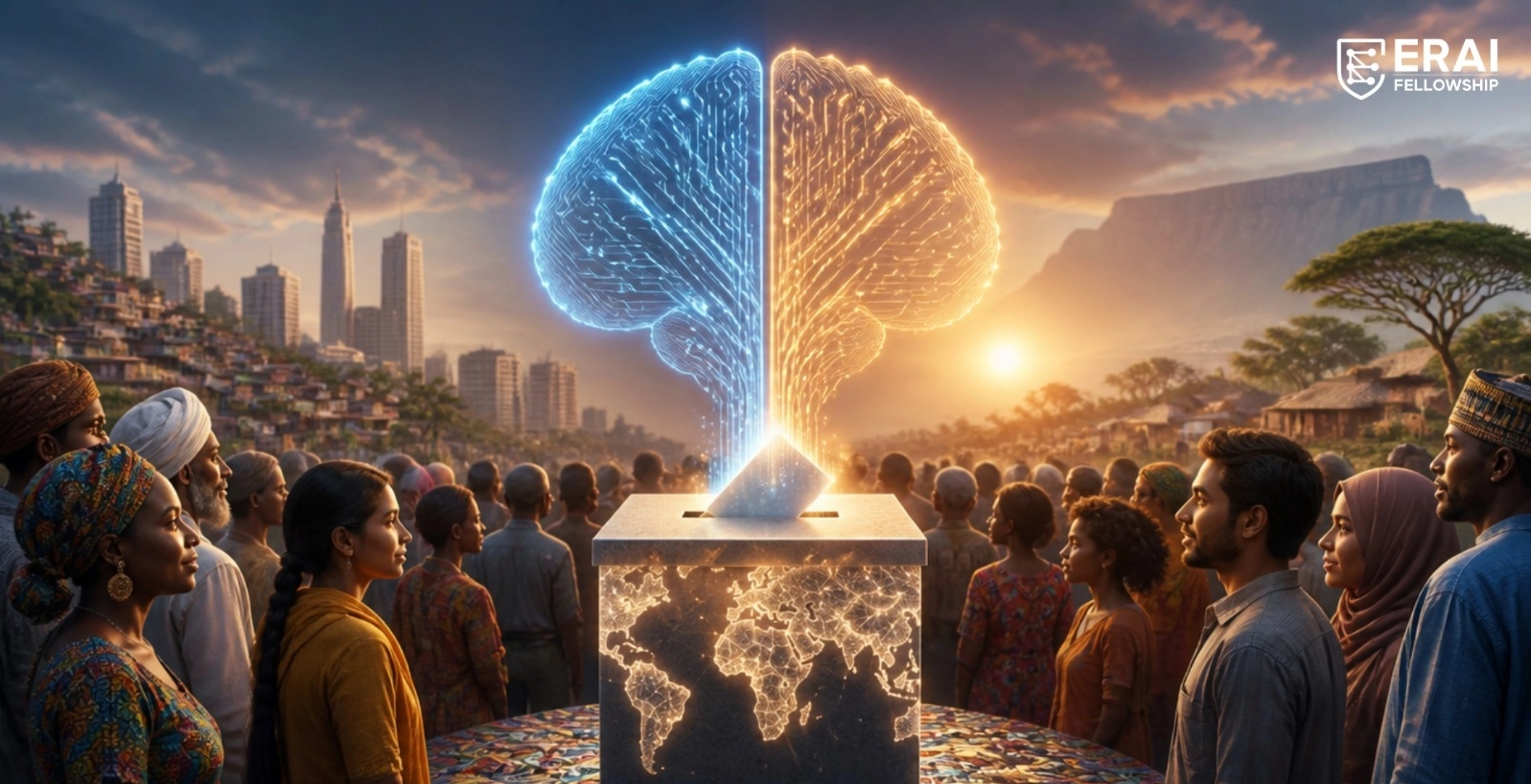
The Western press frequently highlights issues related to the effects of technological disruption in developed democracies. On the other hand, developing countries undergo digital changes that influence democracy each day. The real transformation happens across diverse regional landscapes outside the West. This briefing examines how AI elections and Global South dynamics are transforming political competition across several continents.
How is AI affecting elections in the Global South?
Voters encounter synthetic audio clips, deepfakes, and automated social accounts constantly. Political operatives use these generative systems to shift public sentiment rapidly during campaigns. Low production costs make sophisticated tools accessible to local campaigns. The AI election interference developing countries confront expands with every major polling cycle.
The World Economic Forum Global Risks Report 2026 identifies misinformation as a severe global threat. Resource-constrained democracies feel this pressure intensely during polarized campaigns. Weak regulatory enforcement exposes local voting populations to continuous manipulation. These vulnerabilities accelerate AI disinformation risks across complex digital ecosystems.
Digital literacy levels vary widely across emerging markets. Many first-time internet users consume news exclusively through mobile messaging platforms. When synthetic content reaches these closed channels, verification becomes extremely difficult. This highlights how modern AI elections Global South communities experience information flows today.
On-the-Ground Realities: Three Key Case Studies
Campaign strategists test generative systems across massive voting environments. Local socio-political conditions shape how synthetic material circulates. Field reports from Asia and Latin America highlight distinct regional challenges.
1. India: Hyper-Localized Synthetic Outreach
India operates the largest democratic exercise in the world. Political parties deploy voice clones to translate speeches into dozens of regional languages. Candidates reach millions of constituents simultaneously in their native dialects. This localized deployment marks a pivotal milestone for AI elections, Global South analysts.
However, bad actors also circulate misleading political audio clips. Cheap voice cloning software allows rapid mimicry of prominent party leaders. Fact-checkers struggle to identify manipulated content inside private messaging channels. This dynamic fuels severe AI disinformation in Global South elections in 2026. It also shows patterns across multilingual voter networks.
Hyper-local targeting enables campaign managers to develop specialized messages aimed at micro-demographic groups. Automated robocalls are indistinguishable from those made by actual political candidates. This represents a grey area. It confuses genuine digital campaigning and clandestine manipulation of voters. It highlights new ways in which AI election interference in developing countries works during high-stakes campaigns.
2. Indonesia: Animated Avatars and Youth Engagement
Indonesia demonstrates how visual persuasion targets younger demographics directly. Campaign teams transform political candidates into friendly, animated avatars. These digital characters engage millions of first-time voters on popular video apps. Such tactics redefine how visual tools drive modern AI elections and Global South campaigns.
Deceptive media spreads alongside these animated campaigns. Generative tools create realistic videos of historical figures to endorse candidates. Fabricated clips distort historical records before fact-checkers can respond. This highlights complex AI election interference developing countries face during competitive electoral cycles.
Visual storytelling appeals directly to digital-native voters across Southeast Asia. Algorithmic feeds push synthetic dance videos and lighthearted memes. This downplays serious political controversies. This deliberate softening of candidate personas makes critical policy scrutiny difficult. These playful strategies worsen AI disinformation and Global South election 2026 vulnerabilities.
3. Mexico: Gendered Attacks and Rapid Disruption
Mexico's electoral landscape experiences significant digital hostility against political candidates. Malicious actors create non-consensual deepfake media targeting women running for public office. Fabricated audio leaks circulate widely on social media minutes before debates. They intensify AI disinformation and global South election concerns for major political parties.
Conventional newsrooms do not have automated systems to spot deepfakes instantly. The networks of bots help spread deceptive stories on social media. Electoral tribunals struggle to adjudicate digital offenses before voting begins. These incidents show severe AI election interference developing countries experience.
Online harassment campaigns frequently use automated text generators to overwhelm campaign volunteers. Coordinated networks flood candidate comment sections with abusive automated messages. This synthetic volume intimidates candidates and drowns out constructive public debate. Such aggressive tactics alter the core dynamics of AI elections Global South observers monitor.
Insights from ERAI's Global Network
The Election Research & AI Initiative tracks these technological disruptions globally. Research findings draw authority from ERAI's 12+-country Cohort 1 field study. Analysts monitor real-time digital campaign patterns across three major continents. Their evidence clarifies how AI elections and Global South dynamics impact democratic stability.
Core Vulnerabilities Identified by Cohort 1
Cohort 1 field investigations reveal consistent structural weaknesses across emerging democracies. These factors accelerate digital manipulation during high-stakes campaigns:
-
Multilingual Gaps: Automated moderation models fail to flag regional language slurs.
-
Encrypted Chat Networks: Synthetic audio circulates rapidly in private messaging channels.
-
Institutional Lag: Electoral tribunals lack forensic tools for rapid media verification.
-
Digital Literacy Deficits: First-time internet users often accept synthetic videos as truth.
These institutional blind spots amplify AI disinformation and 2026 Global South election threats.
Resource constraints prevent local regulatory authorities from inspecting algorithmic platforms thoroughly. In many developing regions, election oversight bodies lack trained technical personnel. This technological gap leaves domestic democratic processes vulnerable to external influence. Addressing this divide remains essential to combat AI election interference developing countries.
The Asymmetric Challenge in Developing Democracies
Major technology platforms design algorithmic safeguards primarily for English speakers. They dedicate fewer verification resources to low-resource languages. Consequently, bad actors exploit localized informational voids without friction. This resource disparity worsens AI election interference developing countries encounter during national campaigns.
Meanwhile, open-source AI frameworks lower production barriers for political operatives. Anyone with basic computer skills can access voice generation tools. A smartphone user can produce convincing political propaganda in seconds. This democratization of tools transforms how AI-enabled Global South communities experience public debate.
Commercial motives for big tech firms favor engagement over correctness. Sensational video fakes receive more engagements compared to policy talk. As algorithms reward emotional content, inflammatory political material spreads rapidly. This amplification exacerbates AI disinformation and 2026 Global South election challenges.
Building Democratic Resilience
Civil society organizations and regional election bodies build innovative grassroots defenses. These initiatives prove that human verification remains essential to democratic resilience. Local teams combine community outreach with open-source forensic workflows.
Actionable Defense Strategies
Democratic stakeholders deploy several practical countermeasures:
-
Community Fact-Checking Networks: Independent journalists share verification tools across local-language newsrooms.
-
Content Provenance Standards: Media organizations attach cryptographic watermarks to authentic campaign footage.
-
Rapid Response Units: Regional election monitors form specialized technical teams to debunk deepfakes.
These collaborative interventions actively counter AI election interference developing countries experience during elections.
Early media literacy education also equips citizens to identify synthetic audio. Community workshops train voters to evaluate sensational claims critically. Citizens learn to question suspicious political posts before sharing them. These community-level initiatives form strong defenses against AI disinformation in the Global South elections' 2026 campaigns.
Cross-border collaboration among regional watchdogs helps identify manipulation patterns early. When a new synthetic tactic emerges in one country, neighboring networks prepare countermeasures immediately. Shared threat intelligence enables faster responses to emerging digital threats. This mutual cooperation strengthens democratic defenses across AI elections in Global South environments.
The Road Ahead
The Global South represents the primary testing ground for democratic digital resilience. Ground-level solutions developed in these regions will shape international policy standards. Election monitors worldwide must study lessons from these dynamic environments. Collaborative vigilance will protect electoral integrity across future AI elections and Global South campaigns.
Access independent research, field data, and policy frameworks from global election observers.
Subscribe to ERAI Insights to receive our upcoming Cohort 1 research findings.